SmartWaterBox Claim 74% Off
ClickBank · DIY Water Guide

SmartWaterBox: Build Your Own Water-From-Air Box

Digital guide · Instant download · 60-day guarantee

SmartWaterBox is a digital do-it-yourself guide that teaches you how to build a small atmospheric water generator — a portable box that cools air below its dew point so the moisture in the air condenses into water you can collect. It is a PDF guide with blueprints, a materials list and step-by-step video instructions. Nothing physical ships. This page explains exactly what you get, what the vendor claims, what the science actually says, and how to stay safe if you build it — so you can decide with your eyes open.

  • ✓ Complete digital package: blueprints, materials list, assembly steps and video guides
  • ✓ Build a small atmospheric water generator from hardware-store parts
  • ✓ Third-party reviewers put the parts at about $90–$110 — you buy them yourself
  • ✓ 60-day money-back guarantee via ClickBank, counted from your purchase date
YES — GET INSTANT ACCESS NOW →
One-time payment · Instant download · 60-Day Money-Back Guarantee · Secure checkout via ClickBank
DIY Water GuidePDF + video guides
60-Day GuaranteeVia ClickBank
Instant DownloadNothing ships
One-Time PaymentNo subscription
SmartWaterBox device — a blue water-from-air box with pipe and tap, filling a glass of water outdoors
SmartWaterBox — digital guide · instant download · 60-day guarantee
Read this first — an honest note

What this guide is — and what it is not

Before anything else, here is the honest picture, because the sales presentation for this product is dramatic and you deserve the other side of the story on the same page. SmartWaterBox is an educational DIY project. It is a digital guide that teaches you to build a small atmospheric water generator — a box that pulls moisture out of the air. It is not a water utility, it is not a certified water treatment system, and it will not make your home independent of the mains water supply.

The vendor makes very large claims in its video presentation: that the box can produce "up to 40 gallons a day" and that it is based on "NASA secret" or "leaked" technology. Those are vendor claims only. No source, study, measurement or independent test is published on the sales page to support them, and this page does not repeat them as fact. In fact, the text version of the sales page prints no daily output figure at all — and that silence is telling, because how much water any atmospheric water generator produces depends entirely on your climate: the temperature and humidity of the air around it. In warm, humid air a small unit can collect a useful amount; in dry air it will collect very little, and in a dry climate it may collect almost nothing. A claim of 40 gallons a day — about 151 litres — from a small portable box is not a figure any buyer should plan around.

Most importantly, the vendor's own disclaimer says the product is "an experiment", that it "was not technically assessed and has not been individually produced nor small-scale produced or mass-produced". That is the vendor's own wording, and it matters more than any headline on the sales page. The guide has not been independently tested, the finished box has not been certified for drinking-water safety, and no output measurements are published anywhere you can check before you buy.

The physics is straightforward and worth stating plainly. Air holds water vapour, and the amount it holds depends on temperature and humidity. Cool a surface below the dew point — the temperature at which the air becomes saturated — and vapour condenses into liquid water on that surface, exactly like dew on morning grass or droplets on a cold drink. That is all an atmospheric water generator does: it cools air, collects the condensate, and stores it. It is real science, and small commercial machines that do this exist. But the amount of water you get is set by the air, not by the box: humid air gives water, dry air does not, and no DIY box can change that. A person needs roughly two to three litres of drinking water a day, and a small home-built unit in average conditions will produce a modest amount — a useful supplement for a household that already has water, not a replacement for a tap, a well or a stored supply.

There is also a safety point that matters more than any sales claim: raw condensate is not automatically safe to drink. Water condensed from air can pick up airborne contaminants, dust and microbes, and a DIY build can introduce contaminants of its own from the materials, the cooling surfaces and the collection basin. Filtration, disinfection and regular cleaning of the collection basin matter, and this page explains exactly what to do in the safety section below. If you buy this guide, buy it for what it verifiably is — a hobby DIY project with illustrated instructions and a refund window — and judge it on that basis within the 60-day guarantee.

One more fact to keep in mind while you read: the author name on the sales page, "James Anderson", is a pen name — the sales page itself says so, explaining it is used to keep the author anonymous. Support is by email at support@watersmartbox.com, and the product is sold through ClickBank under vendor name WATERSB. None of that makes the guide useless, but it does mean you should keep your receipt, buy only through the official checkout at watersmartbox.com, and know exactly how the refund works before you pay. The rest of this page walks through the package, the build, the safety rules, the price and the guarantee in detail.

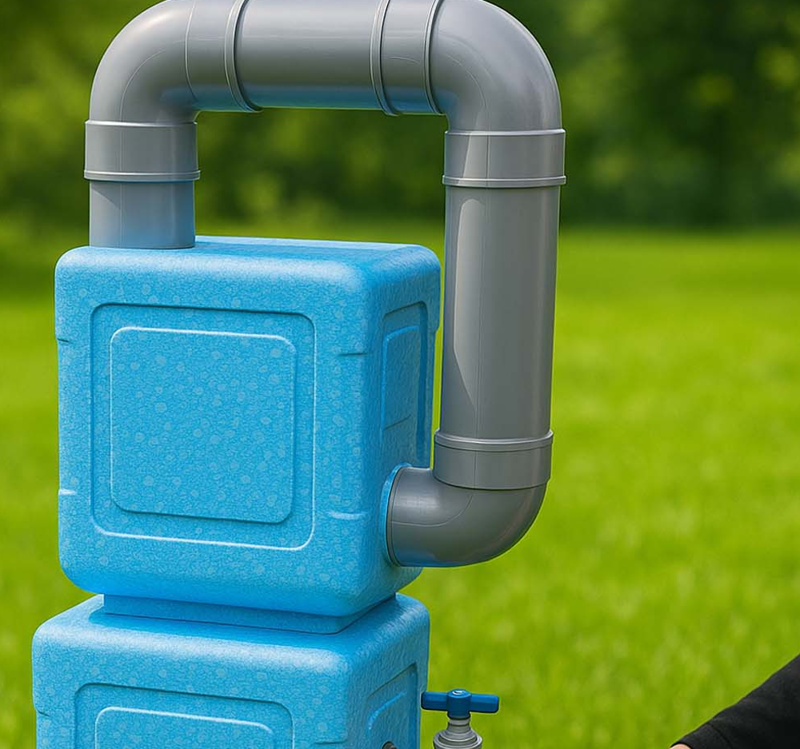
The SmartWaterBox device — blue collection boxes with a grey pipe, shown close up
What is SmartWaterBox?

A DIY guide to building a water-from-air box at home

SmartWaterBox is a digital guide, sold through ClickBank under vendor name WATERSB, that shows you how to build a small atmospheric water generator — a portable box that cools air so the moisture in it condenses into water you can collect. The idea is not new: commercial atmospheric water generators have been sold for years, and the underlying principle is the same one that makes dew form on grass and droplets gather on a cold glass. The guide takes that principle and turns it into a weekend project: a manual, a set of blueprints, a materials list, illustrated assembly steps and video guides that walk you through building the box, fitting the parts and placing it where it will work best.

The package is entirely digital. You receive a PDF guide and video instructions as an instant download after checkout, and nothing physical is posted to you. You source the parts yourself — tubing, a small cooling fan, a food-safe collection container and fittings — from hardware stores, and third-party reviewers put the parts at about $90–$110. Those are reviewers' estimates, not a guaranteed total, and your own cost will depend on where you shop, what you already own, and how closely you follow the materials list. The vendor presents the finished box for home use, for camping, and as an emergency backup water source, and because you are the builder there is no plumbing to arrange and no installation team to book.

On ClickBank's marketplace, the product has a gravity score of 66.35, an average of $53.35 per sale, and a CB Snooper rank of 12 in the survival category. Those marketplace numbers tell you the product sells steadily — they tell you nothing about whether the finished box works as advertised, and they should not be read as evidence for the vendor's water-output claims. The guide also includes three bonus guides — Fix It, DIY Secrets and SunHeat DIY — which are covered in the bonuses section below.

Who is it actually for? People who enjoy building things with their hands, hobbyists who like a practical weekend project, readers curious about off-grid and self-reliance ideas, and preppers who want a small educational project around alternative water sources. It is not for anyone who needs a reliable drinking-water supply, anyone who wants to replace their mains water, or anyone uncomfortable working with basic tools, wiring a small fan and handling water-collection parts. The honest boundary is simple: treat it as a learning project with a refund window, not as a household water solution, and you will not be disappointed by what it is.

How it works

Five steps from download to a finished water box

The guide breaks the project into five straightforward stages. Here is what each one involves — and what to watch out for at each stage.

1

Read the guide & blueprints

Start by reading the whole guide before you buy a single part. The package includes blueprints that show how the box is put together, a materials list, and video guides that walk through the same steps on screen. Reading first matters for two reasons: you will understand what the finished box is supposed to do — and, just as importantly, what it cannot do — and you will spot any tools or parts you do not already own before you spend money. Pay particular attention to the safety notes in the guide and to the safety section of this page, because a water-collection project involves electricity, moving air and stored water, and mistakes with any of those can hurt. If anything in the blueprints is unclear, use the included email support and ask before you build, not after.

2

Source the parts

The guide includes a materials list that tells you what to buy: tubing, a small cooling fan, a food-safe collection container, fittings and the other parts the design needs. Third-party reviewers put the parts at about $90–$110 — treat that as a reviewers' estimate, not a guaranteed total, because prices vary by supplier, by country and by whether you already own basic tools. Buy from a reputable hardware store, keep your receipts, and check that every part that touches water is food-safe: the collection container, the tubing and the fittings must all be rated for drinking water. Do not substitute mystery parts from unknown sellers, do not use lead solder anywhere water will pass, and do not use non-food-grade plastic for the collection basin. Remember the parts money is not refundable even if the guide itself is covered by the guarantee.

3

Build the box

The heart of the project is the box itself: an enclosure that draws air in, cools it below its dew point so moisture condenses, and collects the water in a basin you can drain from a tap. The guide's blueprints show the layout, and the video guides demonstrate the assembly step by step. This is the hands-on part of the build, and it rewards patience: neat, sealed joints matter more than speed, because air leaks and water leaks both waste the effort you put in, and a tidy build is easier to clean later. Work on a clean, dry surface, keep the workspace clear of children and pets, and take breaks rather than rushing the assembly. Remember what the box is: a condensation collector, not a water treatment plant — so a well-built box is a success on its own terms, even though the water it collects still needs filtering and disinfecting before anyone drinks it.

4

Wire the fan & cooling circuit safely

Once the box is built, the guide walks you through wiring the small cooling fan and the cooling circuit that chills the air. This is the stage where the safety rules matter most. Keep the electrical side low-voltage: use the power supply the guide specifies, fit a fuse, and never attempt mains wiring yourself — any work on mains electricity must be done only by a qualified electrician, to local codes. Keep all wiring dry and away from the water path, double-check every connection before you switch anything on, and never run the unit with damaged cables or a cracked enclosure. If a wire gets hot, if anything smells strange or sparks, or if water reaches any electrical part, switch it off immediately, unplug it, and let everything dry out before you investigate.

5

Place it, test it, treat the water

Place the finished box where the guide suggests — somewhere with good airflow and, ideally, warm humid air, since that is where condensation happens fastest — and run it for a day to see what it actually collects. Measure what you get: note the volume, the temperature and the humidity, and write the numbers down, because that is how you learn what the box really does in your climate, rather than what the sales page says it does. Then treat the water before anyone drinks it: filter it, disinfect it, and test it as explained in the safety section below. Do not drink raw condensate, do not use it as your only water source, and do not store it for days in a dirty basin. Then judge the guide itself within the 60-day guarantee window: was the manual clear, were the blueprints accurate, did the support replies help, and was the project worth the price as a DIY build? If the answer is no, use the refund process described below while the guarantee is still open.

Benefits

What this guide can realistically offer you

An honest list — every benefit below is about learning, building and self-reliance, not about free water.

A hands-on water project

If you have ever been curious about where water comes from and wanted to build something with your own hands rather than just read about it, this guide gives you a concrete project rooted in real physics. Building a box that pulls water out of thin air is a satisfying piece of practical science: you follow the blueprints, you see the condensation form, and you end up with a physical object that demonstrates how dew point and humidity behave. That is a genuine pleasure for a tinkerer, and it is the strongest reason to buy the guide — not the sales claims, but the build itself.

Learn real DIY skills

A water-box build teaches skills that transfer to any DIY hobby: reading a blueprint, cutting and fitting tubing, sealing joints, wiring a small low-voltage fan, and testing a build methodically instead of guessing. Those are useful, durable skills, and they are worth learning on a small, low-voltage project before you attempt anything bigger. The guide's step-by-step video format suits beginners who learn by watching, and the illustrated blueprints give you a reference to check against at every stage. Even if the finished box never supplies much water, the skills you pick up along the way stay with you.

A weekend-sized project

The vendor presents this as a project you can finish in a weekend once you have the parts, and even if a careful first attempt takes longer, this is still a project measured in hours rather than weeks. There is no planning permission to seek for a portable box, no plumber to book and no installation to schedule, because nothing is connected to your home plumbing — and nothing should be. For someone who likes finishing things, a small project with a clear end point is appealing: read the guide, gather the parts, build the box, wire it up, test it, and you are done. Just allow extra time for a first build and for the safety checks.

Low entry cost for a hobby

The guide itself is a one-time payment of $39, and third-party reviewers put the parts at about $90–$110. Compared with a commercial atmospheric water generator — which can cost hundreds or thousands — or a drilled well or a large rainwater system, this is a cheap way to explore the world of water-from-air ideas. The honest comparison is not "this replaces your water supply" but "this costs about the same as a modest DIY kit". If you already own basic tools, your extra spend is smaller still. Keep your receipts, though, and remember the parts money is not refundable even if the guide itself is covered by the guarantee.

Understand water — honestly

Building a condensation box and measuring what it does is one of the fastest ways to learn how water in the air actually behaves: what the dew point is, why humidity matters, and where the losses hide. That understanding is protective. Once you have measured a small device yourself, you will be much harder to impress with the next dramatic water claim you meet online, because you will know how to ask for the numbers — litres per day, at what temperature and humidity, measured how, by whom. In that sense the guide can teach a valuable lesson even to a buyer who ends up asking for a refund: how to tell a real water device from a story about one.

A starting point for self-reliance

Many buyers are drawn to this guide because they are curious about off-grid living, self-reliance or being better prepared for an emergency. As a first step into that world, a small water-from-air project is a gentle introduction: it gets you thinking about water storage, filtration, disinfection and safety, and it can spark an interest in the things that genuinely do help — stored water, a proper filter, rainwater collection and a real emergency plan. Think of it as a doorway into water literacy rather than a solution in itself, and follow it up with proven measures if emergency water is your real goal.

60-day refund window

Every order is covered by a 60-day money-back guarantee handled through ClickBank, which is a meaningful safety net for a digital product you cannot inspect before buying. Sixty days is enough time to read the guide, source the parts, build the box, test it in your climate and decide fairly whether the guide was worth the price. The refund covers the guide itself — not the parts you bought — and you should keep your order confirmation and the ClickBank receipt so the refund process is straightforward. How to claim it is explained in the guarantee section and the FAQ below.

Three bonus guides included

The package includes three bonus guides alongside the main manual: Fix It — Become A Professional Repair Expert In 30 Days, DIY Secrets — Save Money By Doing It Yourself, and SunHeat DIY, a solar water-heating guide. No dollar values are published for these bonuses, so this page does not invent any — treat them as extra reading material included in the price, not as a reason to buy on their own. The DIY Secrets guide in particular may be genuinely useful reading for anyone building things at home, since the repair and money-saving skills in it apply to far more than one project.

What's inside

Everything included in the SmartWaterBox package

One digital package, six parts. No physical product ships, and there is no subscription — you pay once and download the files.

The Main Guide

The main PDF guide. It explains the atmospheric water generator idea, walks through the build from start to finish, and sets out the vendor's instructions for assembling the box. Read it end to end before ordering parts, so you know what the project involves and can judge whether the instructions are clear enough for your skill level.

The Blueprints

Diagrams and blueprints of the box layout, included so you can see the finished shape and the arrangement of parts before you start. Use them as your reference while you build: compare your box and your fittings against the drawings at each stage, and stop and re-check if something does not match.

The Materials List

A list of the components you need to buy to build the box — tubing, a small cooling fan, a food-safe collection container, fittings and the rest. Note that no materials list is shown before purchase, so you cannot verify the list, the quantities or the prices until after you have paid — one more reason the 60-day guarantee matters.

Step-by-Step Video Guides

Video guides that demonstrate the build on screen. Video is the most helpful format for an assembly project, because you can see the hand movements, the fitting of the parts and the order of the steps in a way a diagram alone cannot show. Watch each step before you attempt it, and pause and rewind as needed.

Assembly Steps

Illustrated, ordered assembly instructions that take you from a pile of parts to a finished box: fitting the enclosure, mounting the fan and cooling parts, sealing the joints, and connecting the collection basin and tap. Follow them in order rather than skipping ahead — the order is part of the design, and a step done out of sequence is harder to undo than to do right the first time.

Placement Guide & Email Support

Guidance on where to place the finished unit — airflow, temperature and humidity all affect how much water it collects — plus email support from the vendor at support@watersmartbox.com. Ask your questions while you are building, not months later, and keep copies of any support replies — they are useful if you later need to show what you were told.

The package is digital only. No parts, tools or hardware are included in the price — you buy those separately. No materials list, diagram or table of contents is shown before purchase.

Is it for you?

Who should consider SmartWaterBox?

This guide suits a particular kind of buyer. If that is you, it can be an enjoyable project. If it is not, your money is better spent elsewhere.

DIY hobbyists & tinkerers

You enjoy cutting, fitting, sealing and wiring, following a blueprint and ending the weekend with something you built yourself. You already own — or are happy to buy — basic tools, and you like learning by doing. For you, the water-box build is the point, and the guide is a reasonably priced way to try a water-from-air project.

The off-grid curious

You are interested in self-reliance, alternative water sources and how water systems work, and you want a low-cost first step into the subject. The guide can introduce you to condensation, collection, filtration and disinfection — and, if you measure honestly, it will also teach you why real emergency water needs properly stored supplies and certified treatment.

Preppers & self-reliance readers

You like the idea of practical knowledge you can use without the mains supply, and you enjoy collecting skills and guides. Treat this as one small educational project among many, not as your emergency water plan. Stored water in sealed containers and a proper filter are what actually keep a household supplied in an outage.

Campers & outdoor enthusiasts

You like the idea of a portable box that can collect water while you camp — and you understand that it only works where the air is warm and humid, that it needs power for the fan, and that the water it collects still needs treating before anyone drinks it. For a camper who enjoys the experiment, it can be a fun addition to a trip; it is not a substitute for carrying water.

An honest boundary: this guide is not for anyone who needs a reliable drinking-water supply, anyone who wants to replace their mains water, or anyone who cannot afford to lose the parts money if the project does not work out. It is not for anyone with no interest in DIY, anyone unwilling to follow strict water-safety rules, or anyone living in a dry climate who expects the box to produce water from dry air. And it is not a substitute for a plumber, a certified water treatment system, or any properly engineered water supply. Buy it as a hobby project with a refund window — nothing more.

Safety — please read before building

Build it safely, or do not build it at all

A homemade water-collection device can make you ill, damage your home, or put other people at risk if it is built or used carelessly. These rules are not optional.

Condensate is not drinking water

Water condensed from air is not automatically safe to drink. It can pick up dust, airborne contaminants and microbes from the air, and it can pick up more from the cooling surfaces, the tubing and the collection basin of a DIY build. Never drink raw condensate. Filter it through an activated-carbon filter, disinfect it — by boiling it, or with a certified UV or chemical treatment — and, if you plan to drink it regularly, have it tested by a local water-testing lab first. Clean the collection basin regularly, empty it daily, and never let collected water sit for days in a warm basin where bacteria can grow.

Food-safe materials only

Every part that touches water must be food-safe: the collection container, the tubing, the fittings and the tap. Use food-grade plastic or stainless steel, and check that any sealant or adhesive you use is rated for contact with drinking water. Do not use lead solder anywhere water will pass, do not use non-food-grade plastic for the basin, and do not use old or unknown containers that once held chemicals. If a part is not clearly rated for drinking water, do not let water touch it.

Electrical safety for the fan & cooling circuit

The fan and cooling circuit run on electricity, and electricity and water are a dangerous combination. Keep the electrical side low-voltage, use the power supply the guide specifies, and fit a fuse. Never attempt mains wiring yourself — any work on mains electricity must be done only by a qualified electrician, to local codes. Keep all wiring dry and away from the water path, never run the unit with damaged cables or a cracked enclosure, and unplug it before you clean it or change any fitting. If a wire gets hot, if anything smells strange or sparks, or if water reaches any electrical part, switch it off immediately and let everything dry out before you touch it.

Check the law and your insurance

The vendor's own disclaimer warns that some home alteration work "may be illegal in your town, city, state, province or country" and tells buyers to check with their local authority before building or installing anything — so do that, especially if you plan to connect anything to your home's plumbing or drainage, which this guide does not require and which you should not attempt without a licensed plumber. Also check your home insurance: unapproved electrical or plumbing work can affect a claim, and an insurer may refuse to pay for water or fire damage linked to homemade equipment. When in doubt, ask first, and keep the project as a small, portable, standalone box.

What actually gives you safe drinking water: if emergency drinking water is your real goal, the proven steps are unglamorous and they work — store sealed drinking water in food-grade containers and rotate it regularly, keep a certified water filter and a way to boil water, and know where your nearest safe supply is. A small condensation box cannot replace any of those, and no guide can repeal the physics of humidity. Spend your effort where the safety is real, and treat the SmartWaterBox as a hobby project on top of a proper plan — not as the plan itself.

What to expect

Your first 60 days with SmartWaterBox

A realistic plan for the guarantee window. Judge the guide on what you can see and measure — not on what the sales page promises.

Days 1–7

Read & decide

Download the guide, blueprints and videos, and read the whole guide before spending anything on parts. Check the safety rules, look at the materials list, and decide honestly whether the instructions are clear and the project is within your skills. If the guide looks thin or confusing, that is already useful information — and you still have nearly the whole guarantee window ahead of you.

Week 2

Source the parts

Order the parts from a reputable hardware store, using the materials list in the guide. Compare the real total with the reviewers' estimate of about $90–$110, and keep every receipt. Buy only food-safe parts for anything that will touch water, and buy a fuse for the electrical side. If a part is unavailable or far more expensive than expected, note it — that is part of your judgement of the guide.

Weeks 3–4

Build the box

Build the box following the blueprints and video guides, then wire the fan and cooling circuit, checking each step against the instructions. Work slowly, keep the workspace tidy, and follow every safety rule in the section above. If a step is unclear, email support at support@watersmartbox.com while you are building, and keep a copy of the reply.

Weeks 5–6

Test & judge

Place the finished box where the air is warm and humid, run it for a day, and measure what it actually collects. Note the volume, the temperature and the humidity, and write the numbers down. Ask yourself the fair questions: was the guide clear, were the blueprints accurate, did support help, and was the project worth the price as a DIY build? Do not drink raw condensate — filter and disinfect any water you test, and do not use it as your only water source.

Days 45–55

Make your decision

Decide before the deadline, not after it. If the guide delivered a satisfying, well-explained DIY project, keep it and enjoy what you built. If the instructions were poor, the parts cost far more than promised, the box collected almost nothing in your climate, or the support never answered, start the refund process now while you still have time to spare.

Day 60

Refund deadline

Day 60 is the last day of the money-back guarantee, handled through ClickBank and counted from your purchase date. After that date the guarantee closes, so do not leave a refund request to the final hours. Keep your order confirmation and ClickBank receipt until the window has passed, and confirm any refund in writing.

Compare your options

SmartWaterBox vs other options

If your goal is safe drinking water or emergency supply, compare honestly. The DIY guide is the cheapest option here — and the only one that is not a real water solution.

SmartWaterBox

A digital DIY guide for building a small atmospheric water generator. One-time payment of $39, instant download, 60-day guarantee via ClickBank. As a hobby DIY project it is enjoyable and educational; as a water solution it is not. No daily output figure is published on the text sales page, the vendor's own disclaimer calls it "an experiment", and how much water it collects depends entirely on the temperature and humidity of your air. Buy it to learn and build — never as a replacement for real water storage or treatment.

Water Freedom System

A note for readers of this site: Water Freedom System is a different product in the same survival-and-DIY niche — a separate guide from a different vendor, already reviewed on TruVitalHub. It is not the same product as SmartWaterBox, and the two should not be confused: they have different authors, different sales pages and different designs, even though both teach water-from-air ideas. If you are comparing them, compare them as two separate guides on their own merits — and apply the same honest test to both: what output is actually published, and what does it cost to build.

Stored drinking water

Sealed drinking water in food-grade containers, rotated regularly, is the simplest and most reliable emergency supply there is. It costs little, it needs no power, it works in any climate, and it is safe to drink the day you open it. A household should keep at least a few days' supply — roughly three litres per person per day for drinking — and rotate it on a schedule. This is the baseline every honest emergency plan starts from, and a DIY condensation box cannot replace it.

Commercial atmospheric water generator

A factory-built atmospheric water generator from a known brand, with published output figures at stated temperature and humidity, tested safety features, food-grade materials and a warranty. It costs far more than a DIY guide — typically hundreds or thousands — but it is a real, measurable product with a rated output you can check before you buy. If you want a working water-from-air machine rather than a project, this is the honest route: compare the rated litres per day against your climate, and check the running cost.

Rainwater harvesting

A proper rainwater system — gutters, a first-flush diverter, a food-grade tank and a filter — collects real volumes of water whenever it rains, and it is a proven, low-tech approach used in homes around the world. It needs rainfall, space for a tank and proper filtration and disinfection before the water is drunk, and it may need local approval, but the volumes are far larger than any small condensation box can produce. For a home that wants a genuine supplementary supply, this is a far more practical investment than a DIY air box.

Doing nothing

The simplest option, and for a while it feels free. But the risks that worry you — a burst main, a contamination notice, a storm that cuts the supply — do not pause while you wait. The cheapest proven preparation costs almost nothing: fill a few food-grade containers with tap water, date them, rotate them every few months, and keep a way to boil water and a basic filter on hand. Try those first. They cost almost nothing, the evidence for them is far stronger than for any DIY guide, and they give you real water on a bad day.

Official pricing

Get SmartWaterBox below — one price, yours to keep

One package, one price, everything included. Order through the official checkout to qualify for the 60-day guarantee.

⚠ Today-only pricing — this special price is not guaranteed to last.

Secure 256-bit SSL checkout via ClickBank· Visa · Mastercard · Amex · Discover · PayPal· One-time payment — no subscription, no auto-billing

The price shown is a single one-time payment for the digital package. Parts and tools are bought separately and are not included. A note on price: the vendor shows different prices on different landing pages — $39, $49 and $67 variants have been seen — and some visitors are offered a lower exit or best-deal price of $22, so always check the final price at checkout before you pay. An upsell may be offered at checkout — check what it is and what it costs before accepting anything extra, and confirm the final total before you pay.

Free bonuses

Three bonus guides included with your order

The three guides below are included in the price. No dollar values are published for them, so none are claimed here — treat them as extra reading, not as a reason to buy.

1
Fix It bonus guide cover — Become A Professional Repair Expert In 30 Days

Fix It — Become A Professional Repair Expert In 30 Days

The first bonus guide included with the SmartWaterBox package. Its cover promises to teach you to become a professional repair expert in 30 days. It is listed by title on the official sales page with no published description of its contents and no published dollar value, so this page cannot confirm what it contains. Treat it as an unconfirmed extra — useful if you enjoy fixing things around the house, but not a reason to buy on its own.

2
DIY Secrets bonus guide cover — Save money by doing it yourself

DIY Secrets — Save Money By Doing It Yourself

The second bonus guide included with the package. Its cover promises to show you how to save money by doing it yourself. It is listed by title only, with no published description and no published dollar value. If doing your own repairs and home projects is your interest, read it with the same critical eye as the main guide — and the same safety rules: never attempt mains electrical or plumbing work yourself.

3
SunHeat DIY bonus guide cover — a solar water-heating guide

SunHeat DIY

The third bonus guide included with the package — a solar water-heating guide, as its cover and title suggest. It is listed by title only, with no published description and no published dollar value, so its contents cannot be confirmed here. Of the three bonuses, this is the one most closely related to the main guide, since it deals with the same off-grid, self-reliance theme — heating water with the sun rather than collecting it from the air. Read it as background curiosity, and check any claim in it against measured evidence before acting on it.

60DAYGUARANTEE

Your purchase is covered for 60 days

Try SmartWaterBox for a full 60 days. If you are not satisfied — the instructions were unclear, the parts cost far more than the reviewers estimated, the box collected almost nothing in your climate, or the project simply was not worth the price — you can claim a full money-back refund of the purchase price through ClickBank. The guarantee covers the digital guide itself, not the parts or tools you bought separately, so keep those costs in mind when you decide.

Here is exactly how it works. Your 60 days start on the day you place your order. Download the guide, read it, build the box if you choose to, and test it in your climate. If at any point in those 60 days you decide it is not for you, contact ClickBank support or use the refund process linked from your order confirmation, quoting your order details — or email the vendor at support@watersmartbox.com. Refunds are posted in 3–5 business days once approved. Do not wait until day 60: start the process with time to spare, keep your receipt and order confirmation, and confirm the refund in writing. The guarantee covers orders placed through the official checkout, which is one more reason to buy there rather than from any third-party seller.

100% satisfaction — 60 day money back guarantee TRY SMARTWATERBOX RISK-FREE FOR 60 DAYS →
FAQ

SmartWaterBox quick questions

Is SmartWaterBox a scam?+

It is a real digital product sold through ClickBank, a well-known payment processor, with a 60-day money-back guarantee. What is misleading is the sales presentation, not the existence of the product: the video claims the box can produce "up to 40 gallons a day" and is based on "NASA secret" technology, yet the text sales page prints no daily output figure at all, and the vendor's own disclaimer calls the product "an experiment" that "was not technically assessed and has not been individually produced nor small-scale produced or mass-produced". Buy it as an educational DIY guide with a refund window, not as a water solution, and judge it on what you can measure yourself.

Can it really produce 40 gallons of water a day?+

No — not on any published evidence. Forty gallons is about 151 litres, and no small portable box has published measurements to support that figure. How much water any atmospheric water generator produces depends on the temperature and humidity of the air around it: warm, humid air gives water, dry air gives very little. A small home-built box in average conditions will produce a modest amount — a useful supplement, not a replacement for a tap or a stored supply. Plan around litres, not gallons, and measure your own box before you believe any headline number.

What exactly do I get when I buy?+

You get a digital package: the main SmartWaterBox guide (PDF), blueprints, a materials list, illustrated assembly steps, step-by-step video guides, and placement guidance, plus email support. Three bonus guides are also included: Fix It — Become A Professional Repair Expert In 30 Days, DIY Secrets — Save Money By Doing It Yourself, and SunHeat DIY, a solar water-heating guide. Nothing physical ships — it is an instant download. No parts, tools or hardware are included; you buy those separately.

How much do the parts cost, and how long does the build take?+

Third-party reviewers put the parts at about $90–$110 — tubing, a small cooling fan, a food-safe collection container, fittings and the rest. Those are reviewers' estimates, not a guaranteed total, and your real cost will depend on where you buy parts, what tools you already own, and your experience. The vendor presents it as a weekend project, and even if a careful first attempt takes longer, it is a project measured in hours rather than weeks. Budget more than the headline figure, keep your receipts, and allow extra time for a careful first build plus safety checks. Remember the parts money is not covered by the refund — only the guide itself is.

Is the water it collects safe to drink?+

Not as it comes out of the box. Water condensed from air can pick up dust, airborne contaminants and microbes, and a DIY build can introduce contaminants of its own from the cooling surfaces, the tubing and the collection basin. Never drink raw condensate. Filter it through an activated-carbon filter, disinfect it — by boiling it, or with a certified UV or chemical treatment — and, if you plan to drink it regularly, have it tested by a local water-testing lab first. Clean the collection basin regularly, empty it daily, and never let collected water sit for days in a warm basin. Use food-safe materials only, and never use lead solder or non-food-grade plastic anywhere water will pass.

Will it work in my climate?+

It depends on your air. Atmospheric water generators need warm, humid air: the warmer and more humid the air, the more water condenses. In a humid summer climate a small box can collect a useful amount; in a dry climate, in winter, or in air-conditioned indoor air, it will collect very little, and in very dry air it may collect almost nothing. That is physics, not a fault in your build. Before you buy, check your local humidity: if your area is dry for much of the year, this project will disappoint you as a water source, whatever the sales page says.

Is it safe to build and use?+

It can be built safely if you follow strict rules, and it is dangerous if you do not. Never drink raw condensate — filter and disinfect it first. Use food-safe materials only for anything that touches water, and never use lead solder or non-food-grade plastic. Keep the electrical side low-voltage, fit a fuse, and never attempt mains wiring yourself — that is only for a qualified electrician, to local codes. Keep all wiring dry and away from the water path, and unplug the unit before cleaning it. The vendor's disclaimer also warns some home alterations "may be illegal in your town, city, state, province or country" — consult your local authority first.

Who is James Anderson?+

"James Anderson" is the author name used on the sales page — and the sales page itself says it is a pen name, used to keep the author anonymous. There is no published biography, company address or verifiable identity behind the name. Support is by email at support@watersmartbox.com, and the product is sold through ClickBank under vendor name WATERSB. That does not make the guide unusable, but it is another reason to buy only through the official checkout at watersmartbox.com and to keep your receipt.

What is an atmospheric water generator?+

It is a machine that pulls water out of the air. Air holds water vapour, and the amount it holds depends on temperature and humidity. Cool a surface below the dew point — the temperature at which the air becomes saturated — and vapour condenses into liquid water on that surface, exactly like dew on morning grass or droplets on a cold drink. An atmospheric water generator does this deliberately: it cools air, collects the condensate, and stores it. Commercial machines that do this exist and are sold for homes and offices. A DIY box follows the same principle at a much smaller scale, with no published output figures and no certification.

Can it replace my mains water supply?+

No. A small DIY box produces a modest amount of water that depends entirely on your climate, and the water it collects needs filtering and disinfecting before anyone drinks it. It cannot supply a household, it cannot replace a tap, a well or a stored supply, and it should never be connected to your home plumbing. If a reliable water supply is your goal, the honest options are stored drinking water, a proper filter and a way to boil water — and, for a genuine supplementary supply, a rainwater system or a commercial atmospheric water generator with published, rated output.

Do I need DIY experience to build it?+

Some basic familiarity helps a great deal: reading a blueprint, cutting and fitting tubing, sealing joints, and wiring a small low-voltage fan. The guide is presented as step-by-step with video, so a careful beginner can follow it, but you should not attempt it if you have never handled basic tools before without first learning those basics from a reputable source. If any step is unclear, use the included email support and ask before you build. And whatever your experience, never attempt mains wiring yourself — that is only for a qualified electrician.

How do I get a refund?+

The product is covered by a 60-day money-back guarantee via ClickBank, counted from your purchase date. To claim it, contact ClickBank support or use the refund process linked from your order confirmation, quoting your order details. You can also email the vendor at support@watersmartbox.com. Refunds are posted in 3–5 business days once approved. Start the process with time to spare rather than on day 60, keep your receipt and order confirmation, and confirm the refund in writing. The refund covers the guide, not the parts or tools you bought separately.

Where is the safest place to buy?+

Only through the official ClickBank checkout reached from the official sales page at watersmartbox.com — that is the only route covered by the 60-day guarantee. There are look-alike domains claiming to be the official site, including smart-waterbox.com, smartewater-box.com, en-en-smartwaterbox.com and smartwatersbox.us — do not buy from any of them. Do not buy copies from marketplaces, auction sites, social-media sellers or anyone offering a "cheaper" download: those copies are not covered by the guarantee, may be incomplete or altered, and you would have no refund route through ClickBank. The buy links on this page go to the official ClickBank checkout.

Is there a physical product shipped to me?+

No. SmartWaterBox is entirely digital: a PDF guide, blueprints, a materials list, assembly steps, video guides and placement guidance, delivered as an instant download after checkout. Nothing is posted to you, there is no shipping cost and nothing to wait for. The parts and tools to build the box are not included — you buy those separately from a hardware store, using the materials list in the package.

What are the three bonus guides?+

The three bonus guides included with the package are Fix It — Become A Professional Repair Expert In 30 Days, DIY Secrets — Save Money By Doing It Yourself, and SunHeat DIY, a solar water-heating guide. They are listed by title on the official sales page, with no published descriptions and no published dollar values — so this page does not invent values or contents for them. Treat them as extra reading included in the price. The DIY Secrets guide may be the most practically useful of the three, given how widely its repair and money-saving skills apply around the home.

How much does it cost, and is there a subscription?+

The price is $39 as a one-time payment, against a vendor list price of $149 — a saving of $110, or 74% off. There is no subscription and no auto-billing. A note on price: the vendor shows different prices on different landing pages — $39, $49 and $67 variants have been seen — and some visitors are offered a lower exit or best-deal price of $22, so always check the final price at checkout before you pay. An upsell may be offered at checkout — check what it is and what it costs before accepting anything extra, and confirm the final total before you pay. Parts and tools are bought separately and are not included.

Is SmartWaterBox the same as Water Freedom System?+

No. SmartWaterBox and Water Freedom System are two different products in the same survival-and-DIY niche, from different vendors, with different authors, different sales pages and different designs. Both teach water-from-air ideas, which is why they are easy to confuse, but they are not the same guide and buying one does not give you the other. TruVitalHub has a separate review of Water Freedom System; this page is about SmartWaterBox only, and the comparison section above treats them as two separate products to be judged on their own merits.

How do I contact support?+

Vendor support is by email at support@watersmartbox.com. Ask your questions while you are building, not months later, and keep copies of any replies. For payment or refund questions, contact ClickBank support directly — ClickBank processed the payment and handles the 60-day guarantee, and your order confirmation will have the details you need.

What is the realistic best outcome from buying this guide?+

The realistic best outcome is a satisfying weekend DIY project: you learn to read a blueprint, fit tubing, seal joints and wire a small low-voltage fan, and end up with a box that demonstrates condensation in action — collecting a modest amount of water on warm, humid days. You will also learn how to judge water claims by asking for measured litres per day at a stated temperature and humidity. What will not happen is a free water supply, 40 gallons a day, or independence from the mains. If that honest outcome sounds worth $39 to you, buy it; if you were buying it for the water supply, do not.

What actually gives me safe emergency drinking water?+

The proven steps are unglamorous and they work: store sealed drinking water in food-grade containers and rotate it regularly, keep a certified water filter and a way to boil water, and know where your nearest safe supply is. For a genuine supplementary supply, a rainwater system with proper filtration is far more practical than a small condensation box, and a commercial atmospheric water generator with published, rated output is the honest version of what this guide only promises. None of those steps needs a DIY guide, and a DIY guide cannot replace any of them.
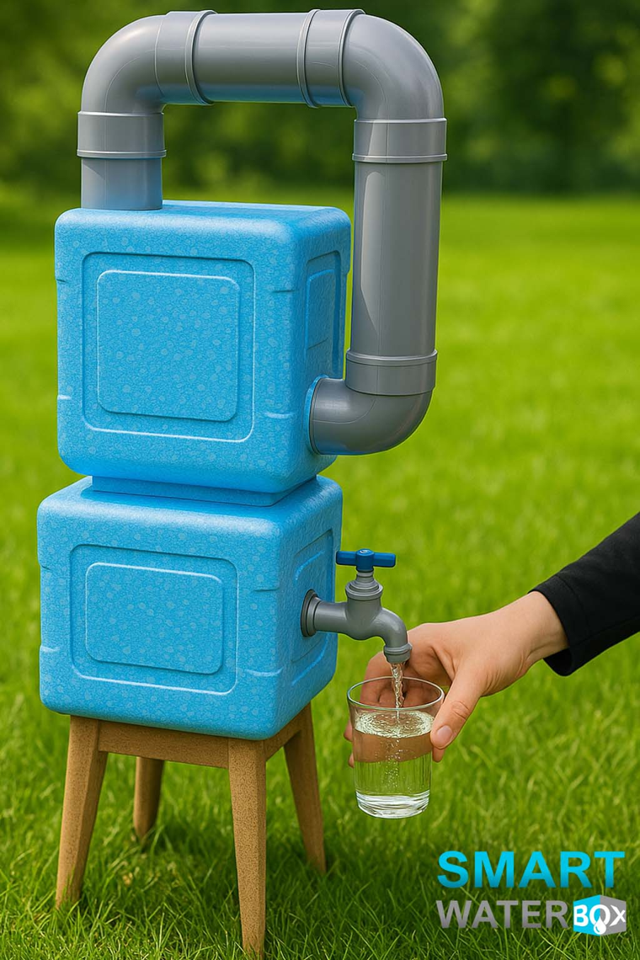
SmartWaterBox device — a blue water-from-air box with pipe and tap, filling a glass of water outdoors

Ready to build your own water-from-air box?

Get the complete SmartWaterBox guide for a one-time payment of $39, with instant download and a 60-day money-back guarantee via ClickBank. Buy it as a DIY project — and judge it on what you can measure.

YES — CLAIM MY 74% DISCOUNT →
SmartWaterBox — $3960-day guarantee · One-time payment
GET 74% OFF →